


The Clean Planet story has moved forward again.
Since our last update, the Japanese Quantum Hydrogen Energy developer has taken several important steps toward commercialization, including new strategic investment, expanded industrial partnerships, real-world demonstration planning, and preparations for mass production.
The important change isn’t another laboratory result.
Clean Planet has not yet reached full commercial deployment, but it no longer presents commercialization as a distant objective. In its own published material, Clean Planet has placed QHe commercialization on a pre-2027 timeline.
That makes what we are seeing in 2026 particularly important. The ¥500 million strategic investment, work with Miura, planned demonstrations with Sankei Building, investment from TANAKA Precious Metals Group, and preparations for mass production increasingly look like pieces of a commercialization strategy coming together.
Clean Planet is now a pre-commercial advanced-energy company actively preparing Quantum Hydrogen Energy for real-world deployment, with 2027 emerging as a key milestone to watch.
A projected commercialization timeline is not the same as a delivered commercial product. Manufacturing readiness, customer installations, and independently verifiable operating performance still have to follow.
But if Clean Planet remains on its stated trajectory, the next stage of QHe could begin moving from preparation into commercial deployment as early as 2027.
And that puts the company firmly among the growing group of advanced-energy companies entering the pre-commercial stage.
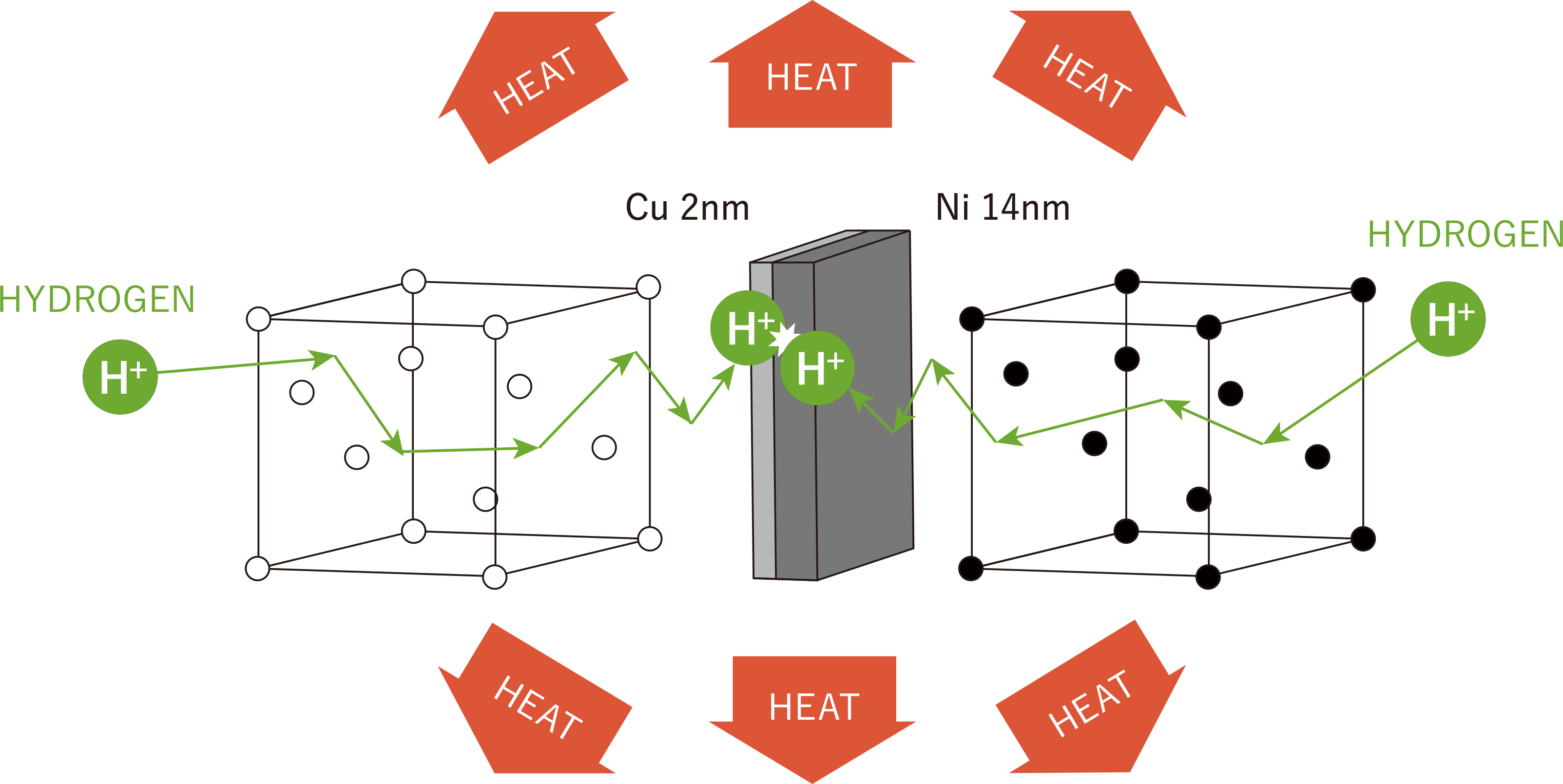
What is the heat
generation phenomenon of QHe?
QHe is a heat-generating technology with hydrogen quantum diffusion. The diffusion is induced by heating a small amount of hydrogen saturated in nano-sized nickel-based composite material.
¥500 Million to Accelerate Commercialization
In January 2026, Clean Planet announced approximately ¥500 million in strategic equity investment, with the company explicitly connecting the new capital to business expansion and commercialization.
Clean Planet says it has now reached the point where it is preparing for broader implementation and mass production of its Quantum Hydrogen Energy, or QHe, technology.
QHe is designed to produce substantial heat from very small quantities of hydrogen interacting with engineered metal materials. Clean Planet ultimately sees the technology being used across industrial heat, buildings, and other large-scale thermal applications.
The challenge now is increasingly about turning that technology into something that can be manufactured and deployed reliably.
The Industrial Heat Strategy Is Taking Shape
One of Clean Planet’s strongest commercialization advantages remains its relationship with Miura Co., Ltd., a major Japanese industrial boiler manufacturer.
Rather than trying to replace entire energy systems, Clean Planet is developing QHe as a new heat source that can potentially integrate into existing industrial infrastructure.
That is an important distinction.
Factories already need boilers. Buildings already need heat. Industry already has enormous thermal demand.
If QHe can reliably replace the combustion source inside those systems, Clean Planet doesn’t need to create an entirely new market. It can enter one that already exists.
From Industrial Boilers to Buildings
Another significant development came in March when Sankei Building invested in Clean Planet and outlined plans to explore QHe deployment in its office buildings and hotels.
That moves the commercialization discussion into something much more tangible.
The companies are examining whether conventional heat-source equipment, including boilers, could eventually be replaced with QHe systems.
This is exactly the type of transition we should be watching.
The next major test for frontier energy isn’t simply whether excess heat can be demonstrated in a laboratory. It is whether the technology can operate reliably inside a real building or industrial facility where uptime, economics, maintenance, and safety all matter.
More Industrial Capital Is Arriving
The commercial ecosystem continued expanding in July when TANAKA Precious Metals Group made a strategic investment in Clean Planet.
Then in August, Clean Planet strengthened its scientific and management leadership specifically around accelerating QHe development, practical implementation and industrialization.
Taken individually, these developments might not seem transformational.
Put them together and a pattern appears:
Capital. Industrial partners. Manufacturing preparation. Demonstration sites. Materials expertise. Commercial infrastructure.
Those are the pieces required to move a technology out of development and toward a market.
Clean Planet’s intellectual-property position is expanding alongside that effort. The company reported 128 patents across 35 countries in January. By March, it reported 155 secured patents across 35 countries.
Where Clean Planet Stands Today
This is where I think we need to be precise.
Clean Planet has not yet reached full commercial deployment, and it has not demonstrated commercial deliveries at scale.
But it is becoming increasingly difficult to describe the company simply as an experimental research effort.
Clean Planet is now a pre-commercial advanced-energy company actively preparing Quantum Hydrogen Energy for real-world deployment and eventual mass production.
That is the transition.
And Clean Planet isn’t alone.
Across the broader LENR and condensed-matter nuclear science landscape, we are now watching several companies approach this same boundary between experimental technology and commercial engineering.
That makes the next phase particularly important.
The question is becoming less about who can produce an interesting laboratory result and more about who can manufacture a repeatable product, put it in a customer’s hands, and keep it operating.
For Clean Planet, the pieces needed to attempt that transition are increasingly falling into place.
Roadmap for Commercial
Application
2012 - 2018 PHASE 01
Basic research at academic institutions
Joint Research Center with Tohoku University established (2015 -)
NEDO project confirmed excess heat generation and reproducibility
2019 - 2021 PHASE 02
Preparation for
commercialization
R&D of various prototypes for commercialization
Building patent portfolio
2022- PHASE 03
Completion of prototype
Design, test, and completion of prototype for industrial boilers
Building partnership with steel, chemical and agriculture industries
2026-PHASE 04
Completion of product and testing for mass production
Prototype production at pilot plant
Expansion of patent portfolio on production processes
Product design for agriculture, chemistry, steel and power industries
PHASE 05
Start of production
at Plant #JP001
Start of sales to the Japanese market
Sales of products for agriculture, chemistry, steel and power industries
PHASE 06
Start of mass production using know-how accumulated at Plant #JP001
Mass production and sales in the international markets
Application of products for residence and vessels
What We Watch Next
Now we watch for the milestones that really matter:
Commercial demonstration units.
Independent operating data.
Manufacturing readiness.
Industrial installations.
Customer commitments.
And ultimately, commercial deliveries.
Any one of those could materially change how Clean Planet should be viewed.
The company isn’t across the finish line yet.
But it is clearly getting closer to it.
And with more companies across this field now entering pre-commercial development, the race is increasingly moving out of the laboratory and into the real world.
That is where New Fire Signal will continue watching it. NewFireSignal.ai
~New Fire Energy Inc.
Disclaimer:
The information provided in this report, including corporate updates and performance claims regarding Clean Planet and its partners, is based entirely on publicly available information published by these entities.
New Fire Signal is an analytical service tracking advanced energy technologies. We have not independently verified, audited, or confirmed the accuracy, timeliness, or validity of any claims, data, or projections presented by Clean Planet or its partners. Commercial viability, operating performance, and safety of the QHe technology must ultimately be judged against independently verifiable operating data and successful long-world deployments.
This report is for informational purposes only and must not be construed as investment advice, financial advice, or a recommendation to buy or sell any security. Any investment in the advanced energy sector involves significant risk, including the loss of principal. You must always perform your own due diligence and consult with a licensed investment professional before making any financial decisions based on this information. New Fire Signal makes no warranties, guarantees, or representations regarding the accuracy of this data or the successful commercial outcome of the technology discussed.